I ran my first marathon - the 5-borough 26.2-mile tour of New York City on November 6th. Today, as we celebrate Thanksgiving, I finally have a day off, and enough mental and emotional stability to pen my thoughts on the pre-, in-, and post-race experience.
As the saying goes - A journey of 400 miles begins with a single step. That first step came when Coach Sandy from Team In Training came to talk to folks at Bloomberg. I knew Sandy was a hurricane but little did I expect to be stirred enough to start dreaming of the impossible. Yet, that's exactly what transpired, and within a fortnight, I was running with a group of people who felt strongly about fighting blood cancers, a cause that I fortunately have no connection to.
All the excitement and the dreams did get the better of me when I began over-training and fell prey to an injury that would keep me out for 6 long weeks. Those anxious days had me at the edge of letting go, especially at a time when my idol had announced he wouldn't compete for the rest of the year. It took an anonymous e-mail, some effort, a lot of physiotherapy, and loads of inspiration and pep-talk from an absolutely brilliant coach, to get me to believe that all wasn't lost. awaiting.miracle24@gmail.com, I don't know who you are but if you are reading this, thank you for unknowingly being my miracle the day after a leading coach in the city had told me I should quit.
From then on, there was no going back. Never before have I stuck to a schedule as peRFectly as I did for 78 straight days leading up to the marathon. Never before have I monitored my diet so closely, and made sure I stayed away from anything that could dehydrate me, slow me down, or alter my body composition. Never before have I felt so optimistic, motivated and excited, yet not lost my discipline. It didn't come quick and easy but as my coaches like to say - If marathons were easy, everyone would do them.
I'll quickly fast forward to the day before the marathon, since all my training runs are well-documented online anyway (if you didn't document it on social media, did you really do it?). A few weeks ago, while watching the Spirit of the Marathon at a friend's place, I'd heard a dialogue - Marathon is the common man's Everest, and it got me thinking - I'd always dreamt of winning Wimbledon, maybe this marathon was how I would finally have my own Grand Slam trophy!
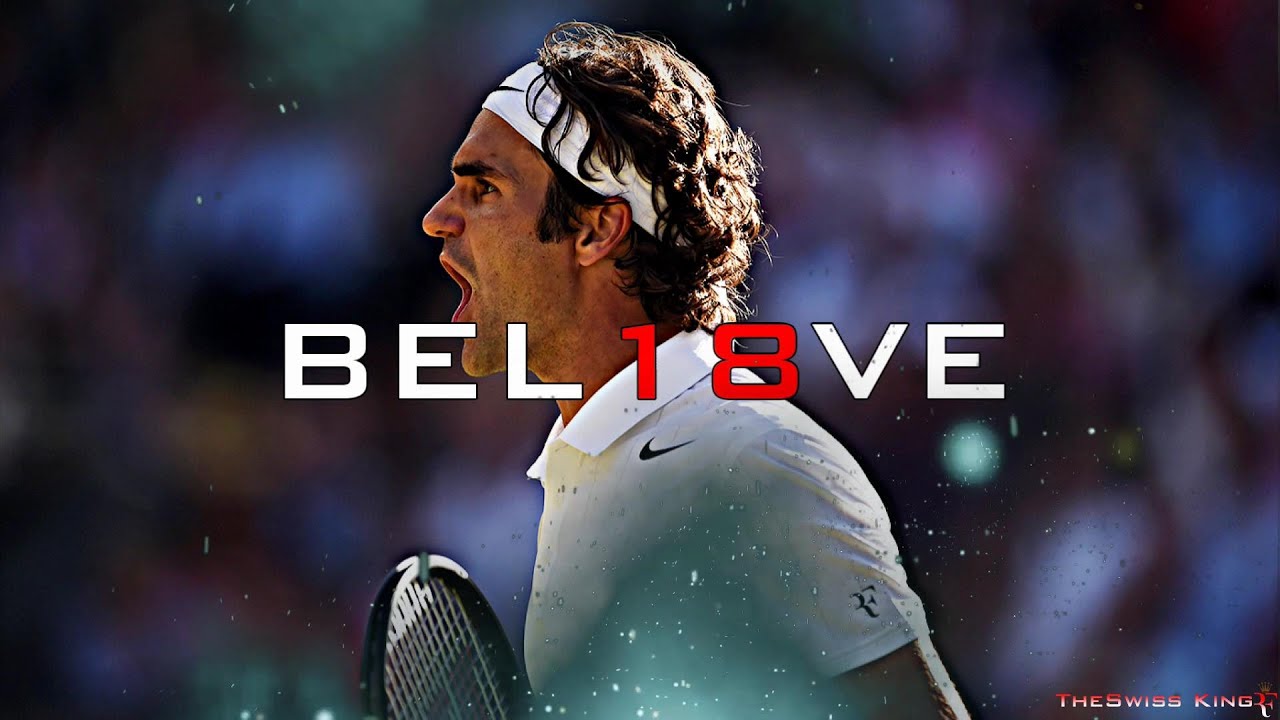
And so, the day before the big dance, I sat down to revisit the final of Wimbledon 2003 - the first in a series of 17, and hopefully more to come (#BEL18VE).
 |
| First of 17 such glorious moments - Wimbledon'03 |
For all the inspiration that I have always drawn from him, I then stitched his logo to be my talisman. As soon as I'd finished my crafting, I realized two things - (a) the alignment was a disaster, and it wouldn't show in most head-on pics (sorry Roger), and (b) I would be incredibly biased if I put his name on, but not that of another reservoir of positive energy that I had tapped into when I was in need. And so, my jersey looked as follows:
 |
| Best pre-race decision ever! |
RACE-DAY
Contrary to most experiences I had heard, I had had a very calm week with no anxiety, and had slept well even the night before. I was soon going to realize what calm before the storm really meant. Things started off as per schedule, with the team-bus getting me to Staten Island by 7:15am, around 4 hours before I would start running. I had planned accordingly, and carried enough water, food (3 different kinds of 200-cal protein bars to choose from) and warm clothes for the pre-race part. The awe of the task at hand and the inexperience at what lay beyond 21 miles did get to my head and I consumed all 3 bars thinking my body would have enough reserves to withstand whatever came. Rookie mistake.
Before I get to the race recap, it's imperative to mention my strategy and race goals. All my post-injury runs had been a 3+1 run/walk, which had actually allowed me to maintain the same pace as running, because the intermittent recovery intervals would let me go a bit faster on the run ones. My goals were a strictly prioritized list that read - (a) finish injury-free (b) negative split (c) 4 hours. If all went well, and it looked like I would be able to get all 3 goals, the plan was to run at a 9:30 pace for the first 8 miles, then 9:20 for 5, 9:10 for the next 5, and 9 for the final 8.2
Miles 1-2:
The first mile took me 11+ minutes, which I was very happy with, since I had been told to hold back and not zig-zag among the crowds while climbing the Verrazano Narrows bridge. The descent went well too, with the advice of not hammering my quads ringing in my head.
Miles 3-4:
Brooklyn, you beauty! The first of two post-bridge energy bursts. I could feel the zeal in the air around, and it felt great to have random people cheering my name. By the end of it, I had brought my average pace up to 10:03, which was off the 9:30 goal, but I knew that with the first mile taking longer, I hadn't done too bad, and could always make it up later if I conserved energy.
Miles 5-9:
Shut up, Brooklyn! To put things into perspective, the only timed race I had done before was a little 5k the previous Sunday. My three longest training runs had involved me running ahead of and behind run-groups, but mostly not with someone, and so I was used to being in a calm and quiet zone. When the rock-bands came along, it did upset my rhythm a bit, especially with my inability to hear my interval-timer. There were multiple instances where I would feel that I'd been running for a really long stretch, then pluck my gymboss off the hydration-belt only to see that I had skipped a walk-break. The result being that these 5 miles came at an average pace of 9:21/mile, definitely faster than I should have gone.
Miles 10-13:
Remember those 3 bars I had consumed earlier in the morning. Here they come into play. A heavy stomach never makes for a good run, and that's precisely what happened. I tried maintaining a 9:40 pace, but it was turning out to be tough. One minor reason that added to the trouble was also that the course was measured along the shortest path. It threw off my mile splits by 10-15 seconds, something that kept putting me in a dilemma as to whether or not I should try recovering that lost time. I had read about it here, but didn't know the frustration until it started impacting me in person. That link, by the way, is an excellent read on what mental preparation looks like. An average pace of 10:27 over these 4 miles, and I knew that my 4-hour dream had evaporated.
Mile 14:
The course clock at the 13.1-mile mark told me I had taken roughly 2:09:45 for the first half, which I wasn't too upset about. At that point, I thought I had only made it easier for myself to negative split by going slower overall than initially targeted. Oh, the things the mind tells itself, so you can feel good. So, I re-calibrated my goal to a 4h20m marathon, and accordingly shifted to a 9:50 pace. This mile took me 9:47. BAZINGA! Amazing! Forget the first 13 miles. Run the mile you're in. You're doing great!
Mile 15:
A deliberate slow-down to gear up for the big climb coming ahead. 10:35 for a mile. Uhh, not bad. I trusted myself enough to run a 9-minute mile at the end if I could stay fit.
Mile 16:
The Queensboro! One of my favorite places to run. With the serenity around, it became so much easier for me to focus my thoughts, and plan out what I was going to do. I could still feel that my belly wasn't in an ideal condition, and remembering that my coaches had told me people generally overlooked the first port-a-johns right after the bridge, I decided I would go. In one of many e-mail correspondences, I had told my coach how I would use the quiet to think about everything we had gone through, all the runspiration, the cause that I had begun to feel so passionately for, the familiarity of what lay ahead, and how I was running towards a safe haven - home, work, friends, coaches on the course. And that's exactly what I did. And lo and behold, the big monster was out of the way. A highly experienced ultra-marathoner had advised us that this should be the slowest mile of the race. I took my 11:35 with pride. Sadly, it was to lose its title of slowest-mile in the next half hour. To my surprise, I got a strange surge of emotion during the descent when I first heard the crowds of Manhattan. Woah buddy, whatever happened to not crying outside of tennis matches. Or was this really a game of tennis?
Mile 17:
A happy mile. This was where I met my first non-TNT support crew. Thank you Mike and Ann for coming out and cheering me on. And then, I met my run/walk coach Deb, who had started in the wave preceding mine. We had agreed before-hand that if we met before the half-marathon mark, she was to grab me by the shirt and keep me from speeding away. Luckily, it hadn't come to that. 11:22 with the bathroom break, and I felt really good about my chances of getting the negative split. I had calculated that I would need an approx. 9:35 pace over the remainder, which I believed I could pace myself to, given my acquaintance with 1st avenue and the park.
Mile 18:
10:23 for the mile, lagging behind by a bit now, but still ok. I went past my home, and chuckled at how I wanted to go another 8 miles instead of traversing the one block to my comfy bed. In the week leading up to the race, a friend at work had narrated his own experience from 2015, and advised me to hold on to the sponge that I would get around this mile. Thank you Deets!! I would go on to badly need a soothing wet sponge for my burning quads soon enough.
Mile 19:
I have a heart in my quads!!! During training, the left IT band had been my area of concern. Now that it was playing good, my right quad decided to go throbbing. I'd been warned to expect the unexpected in this part of the race. It was still scary though to feel as if my quads would spill out of my thigh if I ran further. Another slow-down, a 12-minute mile, and bye-bye negative split (see you in 2018).
Miles 20-21:
A bridge shall not descend. Are you kidding me??? The Willis Avenue Bridge didn't help at all with the quads, and I had to stop and take a stretch-break once I had climbed it. I was reduced to pace-walking by then, with little runs as soon as I saw a flat stretch without turns. It was becoming a mind-game, and I was really really glad that anytime I looked down, I could see my two big sources of inspiration right there, sewed on my shirt. I remember recalling how Roger never retires mid-match, and all the quotes I had collected thanks to Noa, from Deena Kastor, Kara Goucher, Taylor Swift, etc. Yes, a t-swizzle quote from a marathon coach. Incredulous, no? But it served a purpose - it reminded me of my reaction when I first got that e-mail, and it made me laugh. At mile 21, every positive emotion helps. This was also where I exceeded my longest run ever, and stopped for a photo. Thank you Deb for the tradition! Helps to take a break, and not have to blame it on yourself LOL. 25 minutes for the 2 miles, and done with bridges.
 |
| RUNSPIRATION |
Mile 22:
Christine, you saviour! My pain was reducing but I had started erring on the side of caution, going really slow so as to make sure I finished injury-free. And then, I ran into TNT's head-coach Christine, who talked me out of my ultra-conservative mode with a few simple words - "I consider mental strength to be your main weapon. Use it now." If not for that, I would surely have dilly-dallied my way to a 5-hour marathon. I ran with her for a bit and when asked if I needed something, I replied Water, to which she sped off to the aid stations. And seeing her do that, I did too. That quick trot convinced me that I still had enough energy to finish strong, and I brought up this mile a full 2:15 faster than the previous one.
Mile 23:
I was still buoyed by those words, and covered this in 10:39, which in hindsight, was a really good one, considering how long that uphill climb on 5th avenue is.
 |
| On 5th Avenue |
Walking Dead. I could feel pain in both quads now, probably because of the effort that went into the previous mile. And shockingly, walking hurt more than running. I was forced to run, albeit at a very slow pace, so as not to aggravate the injury-risk. Another 25 minutes for these 2, but I was almost there now, and wasn't really thinking too much about the time. Anything I did was going to be a PR!
Mile 26:
Although in pain, I desperately did not want to finish with 12-minute miles. A little push got me an 11, not that I was looking at the course clock. I knew that I would be emotional once I had finished, but boy did the tears come out sooner. By the time I'd reached Central Park South and 7th avenue, my eyes were flooded. I saw nothing but a 21-year old Swiss falling to his knees after winning on the hallowed lawns of the All England Tennis Club 13 years ago. And I cried, and cried, and cried.
Finish:
I'm going to be a marathoner. Run. Let go. Finish. 385 yards at an 8-minute/mile pace. It's hard to put that fleeting moment into words, but I'll try. Everything I'd gone through, everything I had chosen to give up, every single long run in unwieldy conditions, was meaningful now. I no longer call them sacrifices, thanks to this quote - One step at a time, I get to make positive choices to fulfil my dreams. For the first time in my life, I'd attained the unattainable. I'd been bruised and battered, yet emerged unbeaten, unbroken.
POST-RACE
I had cried so much, and was thinking so unclear that I exited the park, had a quick TNT interview, and re-traced my steps to the finish line, when I thought I had taken the transverse home. Duh!! Another mile to walk. A mile as a marathoner though (little saving graces). Heat sheet around, medal hanging. The struggle was real. Once I got on the subway, I didn't have enough stamina to open the protein-shake. Thank you random guy who offered help.

In the weeks since, I have truly come to appreciate how this journey has been so much bigger than just me. I'm gratified to see that thanks to some very generous friends, I have raised more than 8300$ for the LLS. It's been heart-warming to see the out-pouring of support from friends, both here and back home. A co-worker told me he attempted a 4-mile walk home for the first time this week, and thought of me when it got tough. Needless to say, it melted my heart, which thankfully, isn't in my quads anymore. My biggest hope is that among the masses that follow me for my academic laurels, maybe, just maybe, someone feels kindled enough to listen to their kid who dreams of being a Wimbledon champion or Olympic marathoner someday, and not an engineer/doctor/cricketer/failure. My biggest hope is that if enough of us take up endurance sports, no future Indian Olympian will have to face neglect of the sort that Jaisha did at Rio 2016.
Anyway, lest I turn a happy recap into a rant, I'll end on a positive note with a short anecdote. The day after the marathon, I ran into someone at work. We were both walking slow. We had medals clinking against our company badges. We spoke simultaneously. We uttered the same word - Congratulations. We must have been thinking the same thing too -
WILL ANYTHING EVER BE IMPOSSIBLE AGAIN
WILL ANYTHING EVER BE IMPOSSIBLE AGAIN
